The Things They Don’t Talk About in the Golf Club
-Fauzan
It was another sunny Sunday when I found myself at the driving range. I wasn’t there to play, just watching some old friends swinging their secondhand golf clubs, trying to enjoy the vitamin-D-rich part of the day. There’s been a rising number of people from my generation in these places, not just to "exercise" but also to carefully record their form, for Instagram, obviously. This "swing-and-share" ritual is a thing for the younger crowd, I agree. But in my observation, there’s one gesture that transcends all generations: everyone swings, then stares far into the horizon, watching their ball disappear into manicured oblivion.
That gaze says a lot.
While my friends hunt for the cheapest range in town, everyone agrees: golf, whether you're driving balls or playing a 18-holes is not the sport of the people. The saying goes: the higher your status, the smaller your ball. Football. Tennis. Then golf. It's a sport chill enough to play while brokering business deals or whispering political maneuvers. Hollywood reinforces this idea, depicting assassins taking hit orders over nine holes. A shoutout from one capitalist tool to another, I'd say. Nevertheless, it’s the sport of bosses.
Which is why no one rides the MRT to a golf club. You drive. At the very least, you have a car.
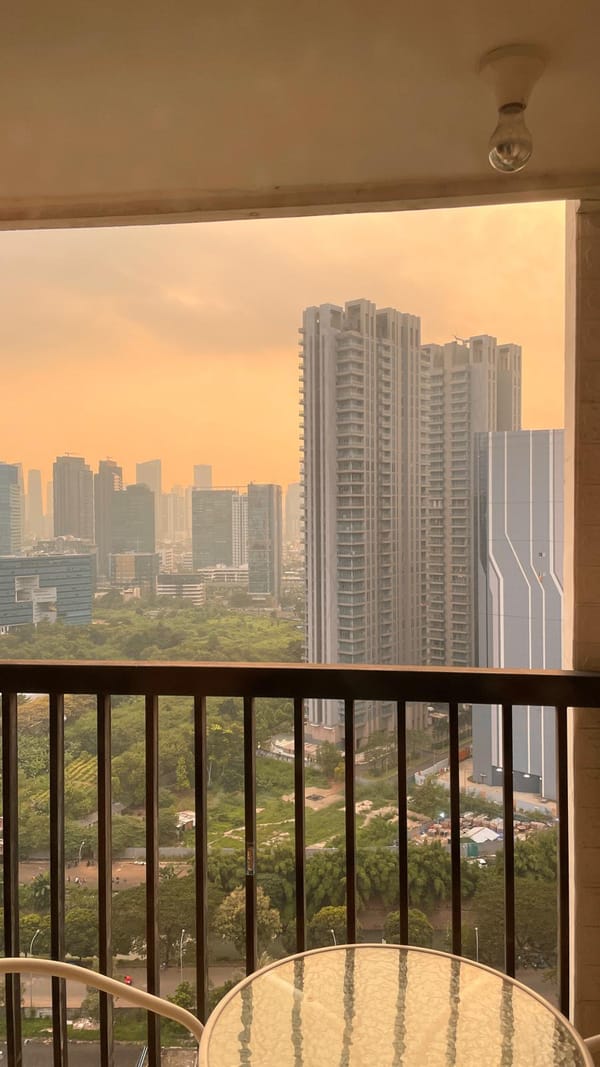
Which makes it all the more surreal. To spend the weekend surrounded by open fields, iced tea in one hand and a Marlboro Red in the other, only to return to Jakarta's daily grind: suffocating traffic, dense housing blocks, and digital reels of urban overcrowding. This stark double life is a ritual for a manicured crowd.
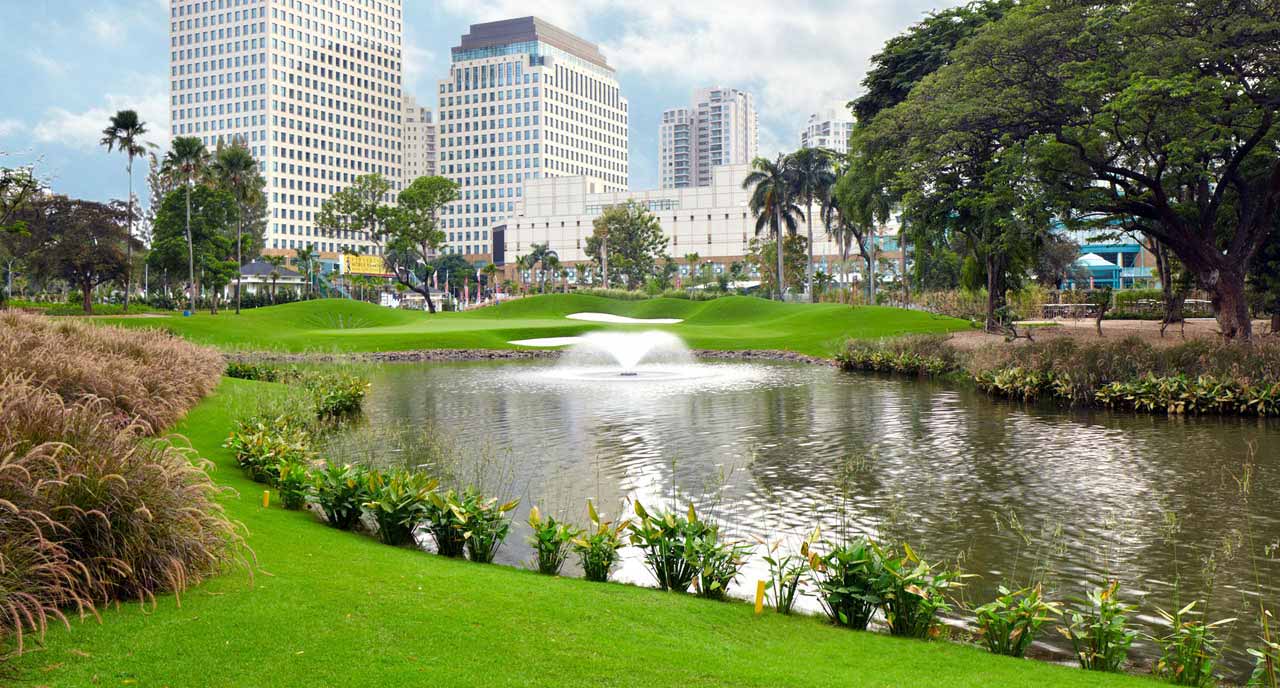
The amount of land Jakarta dedicates to golf courses and driving ranges is staggering. Pondok Indah Golf Course alone takes up over 50 hectares. Senayan adds another 32. Royale Jakarta? Nearly 100. In a city gripped by a housing crisis—where young people are being pushed to the margins, to the peri-urban, and then pushed again to Depok, BSD, or even Legok, this is more than odd. It's offensive.
If we took just the 54 hectares of Pondok Indah and built at densities comparable to Tebet or Kemayoran (22,000–30,000 people/km²), we could house over 10,000 families, complete with infrastructure, walkable blocks, and transit access. Even more if we ditched outdated building codes and aimed for mid-rise vertical housing. This isn't just hypothetical. Singapore’s government is already doing it: converting 400+ hectares of golf land into homes for tens of thousands, because they recognize golf as an "incredibly inefficient use of land benefitting only a small group of privileged people."
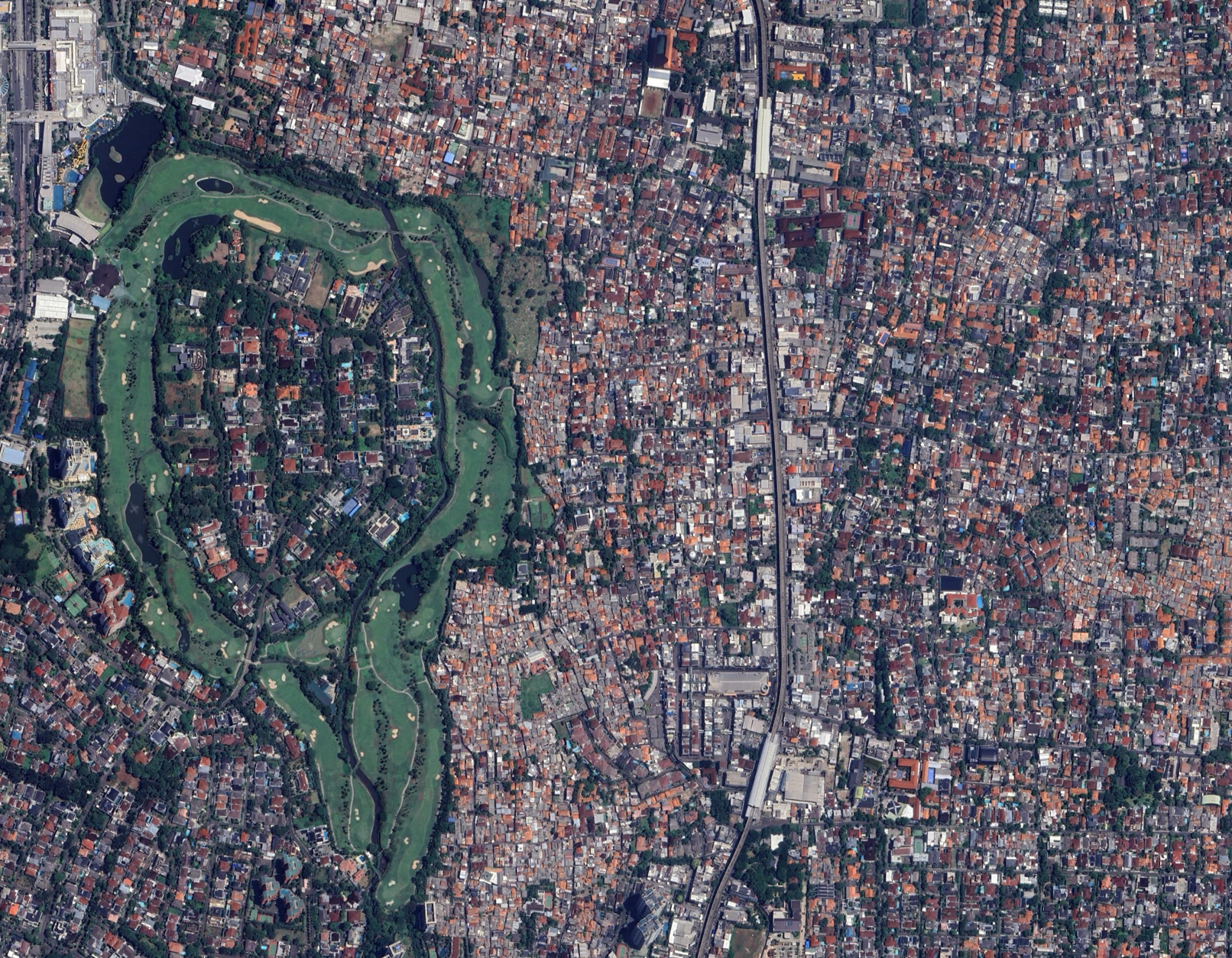
Yet Pondok Indah isn’t just a golf course. It's a ring-shaped fortress. At the center: one of Jakarta's most secure gated communities. Around the edge? The infamous Jakarta's urban kampungs, home to middle and low-income families.
On a map, Cipete Raya MRT station is just 0.6 miles away. In reality? Three miles by road. The course is a wall. The city must detour around it. You have to drive. It turns an urban neighborhood into a transit desert, fueling car dependency, emissions, and time theft.
Even more than numbers, spatially, we could strip a major patch of gated enclave from the urban fabric, and weave the threads together to create whole communities. Connectivity breeds sustainable and resilient cities, indeed, at the expense of exclusivity.
And that’s just one course.
Senayan Golf lies in the capital's core, blocking access between neighborhoods and taking up 32 hectares of CBD land. Royale Jakarta? Nearly 96 hectares for an elite few to whack balls on grass. Multiply that ecological footprint by water use, fertilizers, emissions from carts and mowing, you’re looking at an environmental burden placed squarely on the backs of younger generations, on top of the mental burden of not being able to secure a mortgage by your 30s. US data suggests a typical 18-hole course emits as much CO₂ as 100 homes per year and judging by the emissions per household, Jakarta’s number is likely worse.
Meanwhile, Jakarta is in the middle of a housing crisis. As of 2022, over 12.7 million Indonesians lacked homeownership. In Jakarta, nearly half of all households can’t afford a home even if they tried. Property prices jumped nearly 6% last year, while wages crawled by just 1%. You know who didn’t notice? The people teeing off in Pondok Indah.
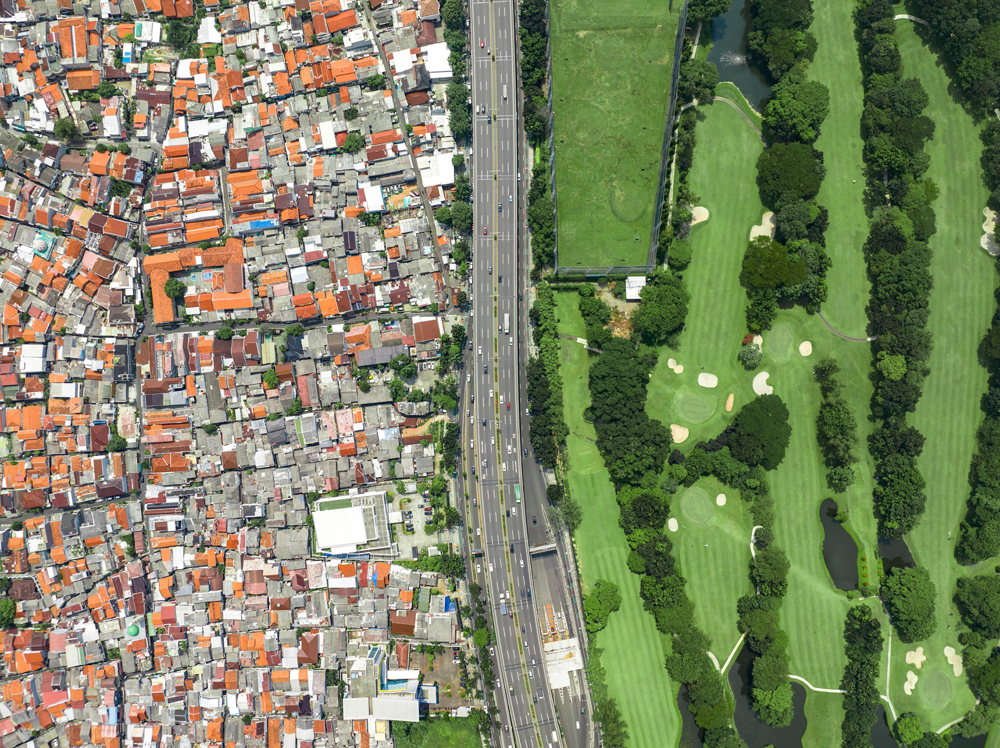
But this isn’t just about land. It’s about inequality baked into zoning and planning. These golf courses are protected under the guise of “green open space” in city plans, the same category as a public park or cemetery. But try walking into Senayan Golf without a membership or a name. That green isn’t for you. And frankly, plain grass doesn’t really do much for the environment.
Jakarta has only 7.1 m² of green space per capita, well below the WHO’s 9 m² minimum. And the city counts golf courses in that metric. Meaning: the park you can’t enter helps make your city look greener than it really is. It’s a statistical scam, embedded in the codes. Even former governor Ahok called it out, urging that Senayan and Kemayoran golf lands be converted into forests or public parks. The fact that, more than a decade later, nothing has changed tells you everything you need to know about who actually owns this city.
People say these courses were developed decades ago, when the areas were still "remote." But decades of neglect, elite lobbying, and political cowardice have turned them into monuments of exclusion. Planners can act. Regulators can rezone. But no one dares to do so.
Because when Jakarta’s lower-middle class gets priced out, they get pushed to the margins—Bekasi, Depok, even Bogor. And when they get evicted, they’re sent to public flats like Rawa Bebek, 20-30 kilometers away from their previous jobs and families. Many lose their income, some lose their minds. Meanwhile, the golf course stays untouched.
Because no one talks about how the rich oppress the marginalized, especially not on golf courses.
It would be impolite. Rude. Too confrontational. Not in line with our Eastern values.
But I’ll say it anyway: in a city where people are evicted and relocated 30 km away for affordable housing, where cemeteries double as parks, and where young people live in the tiktoks of celebrity homes and viral Instagram reels because owning a home is a fantasy, it is an insult to keep hundreds of hectares of prime land locked up for tee times.
Cities are choices.
And golf, in Jakarta, is the choice to segregate.
All so a handful of pretentious executives can smack a ball around and call it leisure.