Stay the Night, Forget the Fight: Airbnb and Jakarta’s Housing Crisis
-Fauzan
How "disruption" hijacked the city, and sold us the same apartment twice.
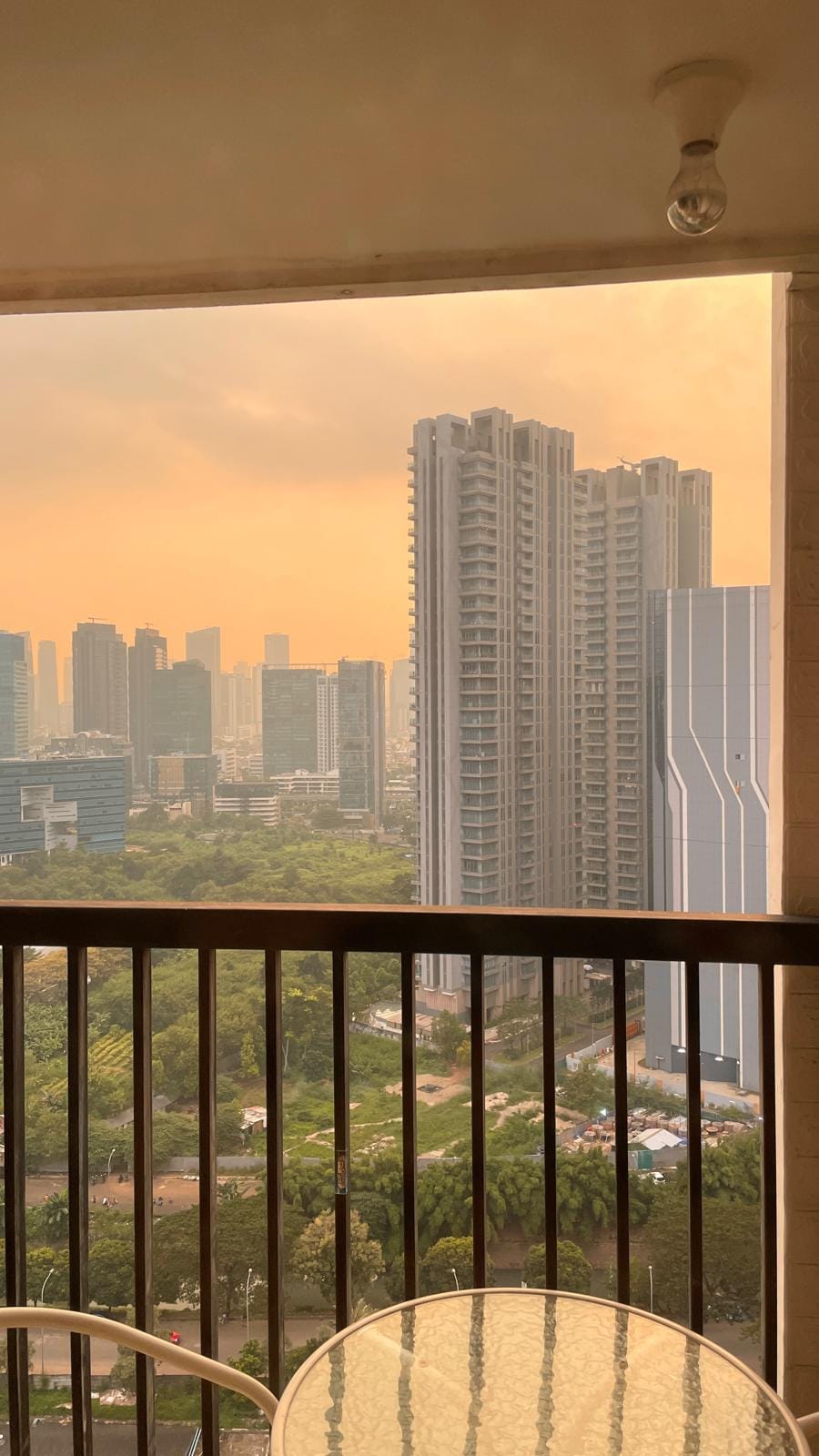
I’m writing this from an Airbnb unit, ironically, hovering somewhere above South Jakarta’s patches of underdeveloped, overvalued lands. Below, the lobby is a revolving door: a couple dragging matching suitcases, a family juggling a toddler and two tote bags full of snacks, a group of friends loudly taking selfies for their monthly “life update” retreat. All of them arrived prepared, as if they follow the same “101 Items for Staycation Guide” account on Instagram. Snacks. Sandals. Chargers. Drinks It’s all ritual now. A borrowed urban break inside a vertical box framed as a hotel.
And yet this is the same kind of place we refuse to live in.
Apartments in Jakarta aren’t homes. Not really. Not in the way we want it to be. We worship landed houses! The ones with a gate, a porch, a potted plant trying to survive the heat. Apartments are for “those who haven’t made it yet.” And so we wake before sunrise, spend a quarter of our waking hours in traffic daily, and tell ourselves it’s worth it. Because out there, beyond the toll road and the gas station line, there’s a little patch of land with our name on it. Even if we waste thirty percent of our paycheck to afford it. Oh, how we are a hypocrite of the spacetime continuum, demanding our own “private space” while ditching a tremendous time of our lives for it.
This is the contradiction we refuse to name. We avoid apartments in the long term, only to pay capitalism again just to spend two nights inside a tall building. And this is where Airbnb slips in, not just as a platform, but as a mirror.
Too many apartments in Jakarta sit empty. You know it, I know it. Google it up and see the numbers. High-rise apartments in the city glow like low-effort Christmas trees; half-lit, half-dead. Officially, someone owns them, maybe even live in them if we’re to check the rental agreement. In reality, they’re held. Held for investment. Held for tax avoidance. Held in the names of cousins and company shells and second sons who live in the parent’s home since they can’t live without the maid doing their laundry and their mom filling their gas tanks. If housing was once a place to settle, it’s now a game of musical chairs where no one intends to sit.
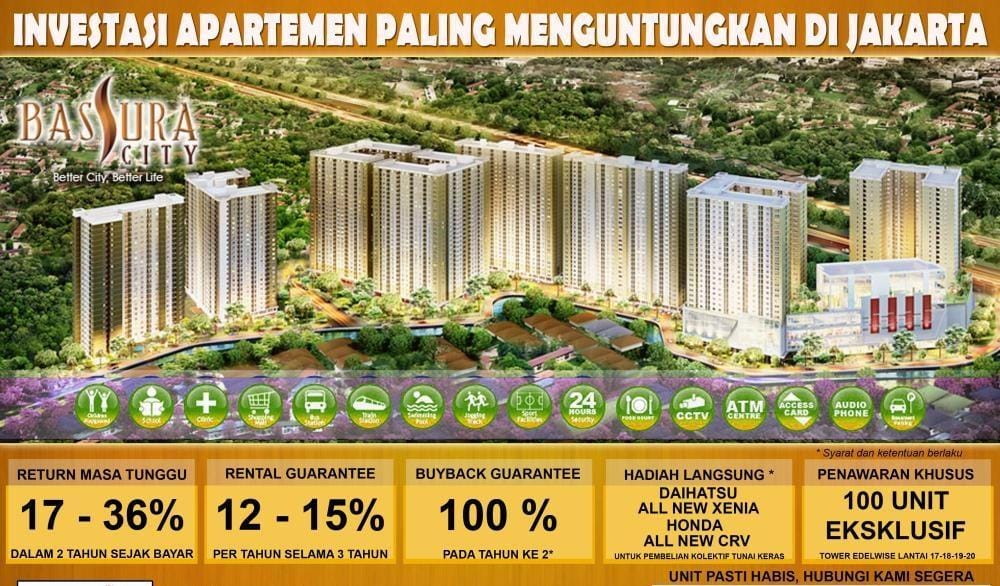
Developers, enthusiastically, of course, push the urgency. “Senin harga naik,” they chant. Monday, the price goes up. It’s absurd and effective. The phrase was first used as a marketing tactic in 2016, and it caught on like fire. It turns shelter, a basic human right into a countdown. You’re not buying a home. You’re buying an insurance. You’re buying before someone else does. You’re fooling the system, they’d say. And when you do, you’re not planning to live in it. Even the developers talk little about living in it. Try to talk one and see that they will talk you up so sweet like a pimp pampering up the whores, if you say you’re looking to invest or you’re planning to flip it. Big smiles and all the numbers will come up. Then, try the next stall saying you’re looking for a place to live, they might help you read the brochure. Why? Because they’re selling commodities. Not homes. Investors with excess cash have a higher chance to buy instead of someone who’s saving money for half a decade for a down payment. The system encourages to let the property sit empty while the city builds itself around your unit like scaffolding waiting to be monetized.
And then comes Airbnb, dressed in innovation, cloaked in disruption. It began as an idea. An inflatable mattress. Spare room. Couchsurfing with capitalism. But in Jakarta, it found a perfect wound to infect. It acts as a poster child of the devil's fornication with Poseidon’s trident. It ruins three aspects of our society in one strike; ramping up interests in property investment, framing apartments as a short-term abode, and ultimately, steering the society’s behavior from living in vertical housing.
It doesn’t help that the rules are so easily broken. Daily rentals are banned in residential towers. Tho it’s on paper. The governor’s regulation is clear: one month minimum. But in practice? Airbnb listings are everywhere. Units flip weekly. Some buildings are more hotel than home. Management pretends not to notice unless the police show up, unless someone complains. And even then, the noise dies down faster than the EDM the last guest left behind.
What Airbnb does is simple: it intensifies the logic we already embraced. It tells us that apartments aren’t for living. They’re for leveraging. That your property should work for you, even if you don’t live in it. That strangers are more profitable than neighbors. That community in apartments is non-existent, a dead weight unless it pays nightly rates.
And of course, there’s the staycation. That brief, borrowed fantasy where we pretend to live in the city we built against ourselves. For two nights, we’re urban. We swim in shared pools, work out in glass-box gyms, order GoFood to the twenty-second floor. Then we go home. Back to Bekasi, or Tangerang, or wherever we could afford to pretend the city wasn’t happening without us.
We keep calling this a housing crisis. But maybe it’s not a crisis. Maybe it’s a culture. Maybe we’ve decided, collectively, that homes are investments first, dwellings second. That living in the city is a privilege to be rented, not a right to be protected.
Airbnb didn’t invent this problem. But it gave it style. Gave it an app. Made it scalable. The same way Gojek didn’t create labor extortion, but made it frictionless, invisible, optimized. The same way we don’t fix the system, but just download a new interface and call it brand-fucking-new.
In Lisbon, they realized too late. After rents rose 37% in one year, the government froze short-term rental licenses and ended its “Golden Visa” program. In Bangkok, they watched whole towers turn into “zero-dollar hotels” owned by absentee foreigners, and only then started knocking on doors.
Jakarta hasn’t reached that edge yet. But the script is here. The symptom is there. The cost is creeping.
And so we must ask: who is the city for?
Because right now, it feels like Jakarta is being rented out behind our backs.
We don’t need more disruption. We need protection. We don’t need innovation. We need intention. Homes are not widgets. Neighborhoods are not product lines. The city is not an app. And if we keep pretending it is, we’ll lose more than just our time in traffic.
We’ll lose the meaning of home itself.