"From you, 2,000 years ago" : How QR Codes Has Become a Tale on How We Betrayed Mankind’s History

This piece is planned to be the first part of a trilogy essay.
I was doing my morning commute a few days ago when I saw a beggar in Jakarta holding a cardboard sign with a printed QR code. She sat quietly in front of a corner cafe, waiting in silence with a blank stare. No shouting, no expression, just holding a piece of laminated QR code usually seen at stores or stalls for payments. People just walked by, myself included. Most don't even bat an eye.
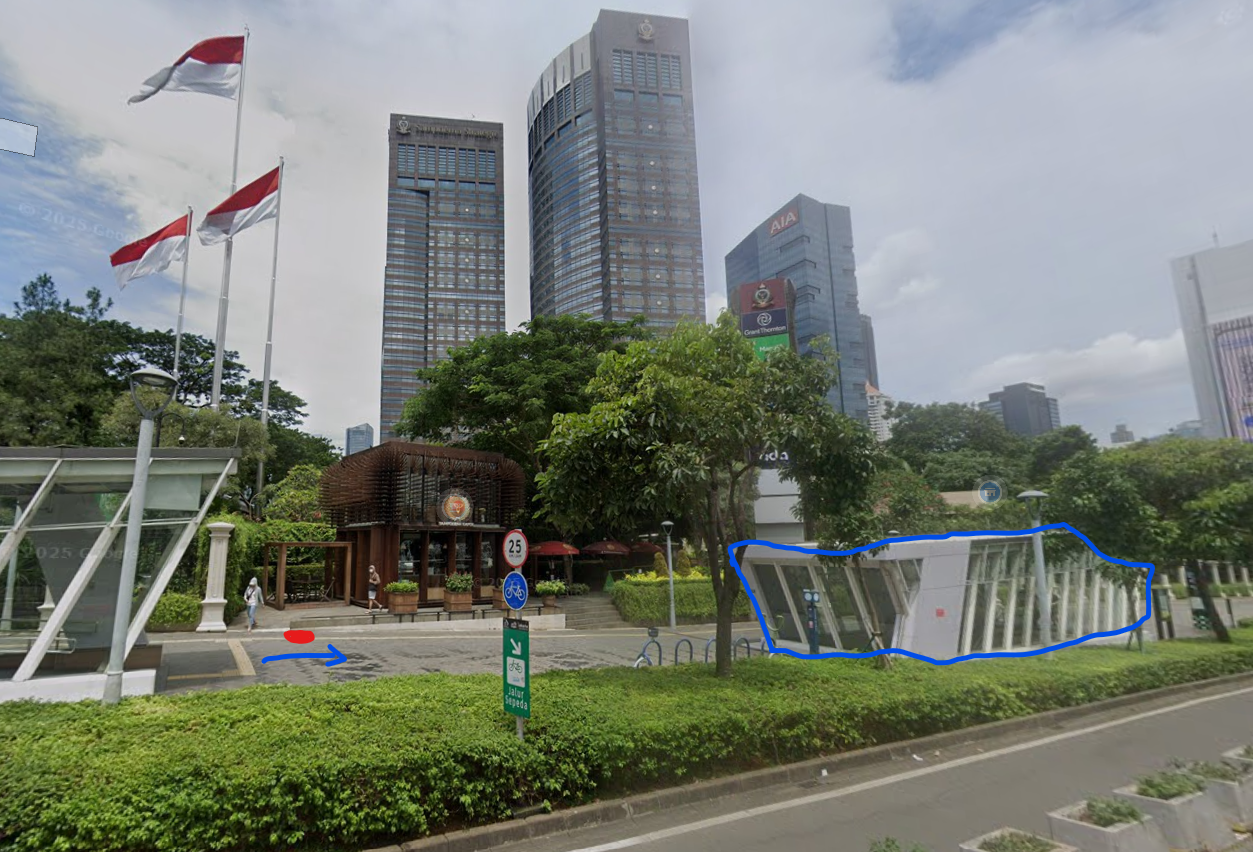
But as I walked down the MRT stairs, I thought about it. In New York, many homeless people don’t even have phones. Many end up on tje street after losing jobs, families, or simply breaking under pressure. They’ve fallen completely out of the system. Living from one homeless shelter to another food bank. But this old lady in Jakarta hadn’t. She was still inside it. She had an account, a digital wallet, and a way to receive money, digitally. Poverty here hasn’t fallen out of the system. It has adapted to it.
At first glance, it almost looked like progress. Like when I saw that one street performer in Blok M using QRIS back in 2022. But the longer I thought about it (as I missed the train and had to wait for the next one, 5 minutes headway at rush hour, so not bad), the more wrong it felt. Because every time someone scanned that code, a fraction of the money was taken as a transaction fee. The poorest person on that street was still paying the system that failed her in the first place.
Some could say "It's not that much, not even one percent". But that's not the point. It's not about quantity, yet it's about substance. Even whether the old lady got the QR codes legally or not is not even the question. It's about how we've built a system where it TAKES MONEY off the needy. It's fucked up.
And a lot of people will say, “that’s just how it works.”
Well that’s exactly the point. Everything in this country can be justified as “the system.” We keep building new infrastructure without substance, then hide behind them when questioned. People are not even allowed to DRINK WATER while riding the MRT. Why? Because it's convenient for the regulators as they would need to pay less workers for maintenance. Traded it with the people's basic rights.
Jakarta has become addicted to convenience. Restaurants refuse cash. Parking attendants only take digital payments. People think using a QR code is a sign of progress. It is a half-truth. The other part we're not admitting? It's also another layer separating us from reality. We no longer want to deal with anything that feels messy or human.
We've built fintech infrastructure and fee policies before we built a real welfare system. We can get online loan applications approved instantly, while the system still cannot ensure food, housing, or healthcare. It can trap the poor efficiently, but it cannot protect them properly. It is humiliation with digital branding.
Even our obsession with digital payments started from weakness. The rupiah is too devalued. It's at one of its lowest values by the time this piece is written. Paying cash in Indonesia looks absurd. Eight people having dinner for two million rupiah would need at least twenty IDR 100.000 bills, the highest denomination we have. It looks outdated and clumsy. So instead of fixing the economy, the government promoted QRIS. They did not solve the problem. They digitized the embarrassment.

People followed, because convenience feels modern. It makes splitting bills easier. It makes bookkeeping a breeze. But convenience without integrity is nothing more than escape.
Thousands of years ago, when the idea of a city first emerged, it existed as a byproduct, but one reason was true: to give people the chance to live better lives than they could in their villages. That was the entire point of building a city.
Imagine 2,500 years ago, somewhere in a Roman territory. A young man leaves his small rural village and walks for days to reach the nearest polis. He finds his first job as a courier, carrying goods, letters, and heavy loads. Every coin he earns comes from his labor. He uses it to buy food and pay for shelter, but he also saves. Over time, he builds enough to start a small fruit stall, buying produce from the same vendors he once worked for.
That was what cities were meant to do. You contribute labor, you earn, you save, and eventually, you build something of your own. The city was a place where anyone could rise through effort and participation. The level playing field.
Now, that logic no longer works.
Most working-class people in Jakarta live from paycheck to paycheck, or worse, from one debt cycle to another. Many of us support parents or younger siblings because the state provides no real safety net. Even basic needs like food, clothing, and housing have become difficult to secure. Most cities don't even have a public transport system, let alone a reliable one. So everyone needs cars, which being taxed higher in Jakarta than in New York. People no longer save to start a business. They save to survive the next medical bill or school payment.
The city no longer upgrades people. It extracts them.
And the irony is brutal. A beggar can access an e-wallet and hold a QR code, but most workers cannot even afford a house down payment. The ones who build the city cannot afford to live in it. Meanwhile, a small part of what they donate to the poor gets siphoned off by banks and the state through transaction fees that make no moral sense. According to QRIS policy, only registered social organizations receive a zero percent transaction rate. A beggar on the street does not.
This is digital feudalism.
People trade their time, their health, and their energy only to stay afloat. Overworked, underpaid, and still taxed at levels higher than what random Americans did for their cars, yet receiving a fraction of the infrastructure. Labor here is not cultivated. It is extracted. We, are extracted.
From manual labor, to manufacturing, to finance and IT, people should move upward. That is how an economy is supposed to work. Correlated with the education, the majority of the labor force should grow in both occupation and expertise. But instead, our system uses people like fuel. Once they are burned out, it just replaces them.
Jakarta, a city that should represent opportunity, has become an engine of exhaustion. A place where everyone keeps working but no one moves.
I did not take a photo of that old lady. It did not feel right. Because maybe the real problem is not that she had a QR code. The real problem is that we have built a country where even compassion has a fee.
And the system just NEEDS to know.